

Introduced in the late 1990s, DOIs have become the backbone of academic publishing infrastructure. Unlike traditional URLs that can break or redirect, DOIs create persistent connections between researchers and the sources they cite. When you click a DOI link, it automatically redirects to the current location of the content, whether hosted by the original publisher or archived elsewhere.
This system benefits authors, publishers, and readers alike. Authors gain permanent citation pathways for their work, publishers maintain connection with their content regardless of platform changes, and readers can reliably access referenced materials years after publication. Understanding DOIs is essential for anyone navigating today’s digital research landscape.
What is a DOI?
A DOI (Digital Object Identifier) is a unique, permanent identifier assigned to digital content, primarily academic and research materials. It functions like a persistent web address that always points to the same piece of content, even if that content moves to a different location online.
DOIs typically look like this: 10.1000/182, where “10” indicates it’s a DOI, followed by a publisher prefix and item suffix. When you encounter a DOI, you can access the content by either clicking the link or entering “doi.org/” followed by the identifier in your browser.
The key advantage of DOIs is permanence. While regular web URLs can break when websites change or content moves, DOIs are designed to always redirect to the current location of the material. This makes them invaluable for academic citations, ensuring that references in research papers remain accessible over time.
DOIs are managed by the International DOI Foundation and are commonly found on:
- Journal articles
- Research papers
- Books and chapters
- Datasets
- Conference proceedings
- Reports and white papers
Purpose of DOIs
Persistent Access DOIs ensure long-term accessibility to digital content. Unlike web URLs that can break when sites reorganize or shut down, DOIs provide permanent pathways to materials, making them invaluable for academic citations and research integrity.
Standardized Citation DOIs create a universal citation system across disciplines and publishers. Researchers can cite materials consistently, and readers can reliably locate sources regardless of which database or platform hosts the content.
Content Authentication Each DOI links to specific versions of content, helping distinguish between different editions, preprints, and final publications. This prevents confusion about which version of a work is being referenced.
Cross-Platform Linking DOIs enable seamless connections between different databases, library systems, and academic platforms. This interoperability allows for better discovery and cross-referencing of related materials.
Rights and Metadata Management DOIs carry embedded metadata about content ownership, licensing, and publication details. This helps manage intellectual property rights and provides standardized information for cataloging systems.
Analytics and Impact Measurement Publishers and researchers use DOI tracking to measure citation patterns, content usage, and research impact across the scholarly communication network.
How DOIs Work
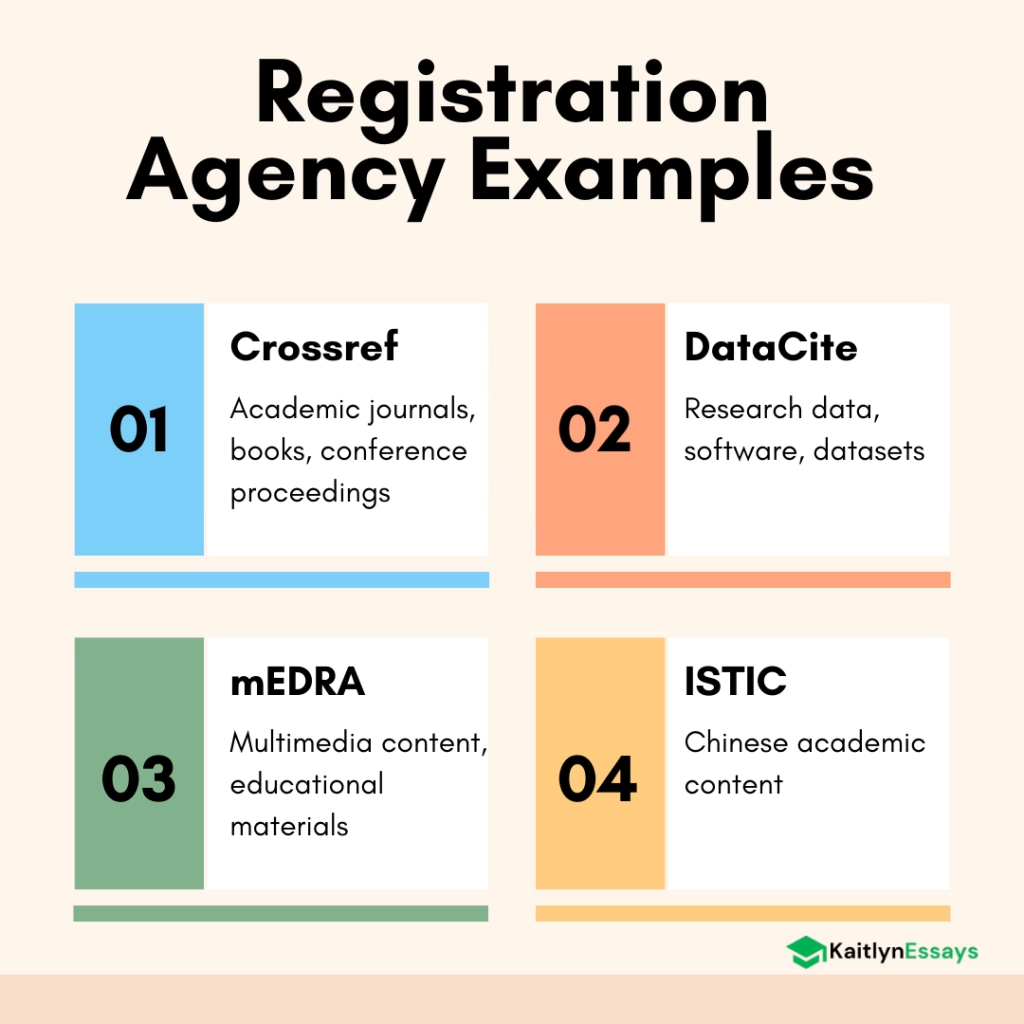
Registration System Content creators or publishers register materials with DOI registration agencies (like Crossref for scholarly content or DataCite for research data). During registration, they assign a unique DOI string and provide metadata describing the content, including title, authors, publication date, and current web location.
Resolution Process When someone clicks a DOI link or enters a DOI into a browser, the request goes to the DOI resolution system. This system acts like a sophisticated phone book, looking up the DOI and finding the current web address where the content lives. The user is then automatically redirected to that location.
Handle System Technology DOIs are built on the Handle System, a distributed network that stores and manages identifier-to-location mappings. This decentralized approach ensures reliability – if one server fails, others can still resolve DOI requests.
Maintenance and Updates Publishers can update the web addresses associated with their DOIs without changing the DOI itself. When content moves to new servers or platforms, they simply update the DOI record, maintaining seamless access for users.
Metadata Integration DOIs carry rich metadata that academic databases and reference management tools can automatically extract, enabling features like automatic citation formatting and content discovery.
Common Uses of DOIs
Academic Publishing Journal articles represent the most common DOI application. Major publishers like Elsevier, Springer, and Wiley assign DOIs to virtually all peer-reviewed articles, enabling reliable citation and access. Conference proceedings, book chapters, and entire books also routinely receive DOI assignment.
Research Data and Datasets Scientific datasets, survey data, and research repositories increasingly use DOIs to ensure reproducibility. Platforms like Zenodo, Dryad, and institutional data repositories assign DOIs to research outputs, allowing other scientists to access and verify underlying data.
Digital Libraries and Archives Major digital collections, including historical documents, digitized manuscripts, and cultural heritage materials, employ DOIs for permanent reference. Libraries use them to create stable links to special collections and archived materials.
Government and Policy Documents Government agencies and policy organizations assign DOIs to reports, white papers, and official publications, ensuring long-term accessibility for researchers and the public.
Educational Resources Online courses, educational videos, and digital textbooks increasingly incorporate DOIs, particularly in open educational resource initiatives and institutional learning management systems.
Preprint Servers Platforms like arXiv, bioRxiv, and SSRN use DOIs to identify preliminary research versions, helping track the evolution of ideas from preprint to final publication while maintaining citation continuity.
How to Find a DOI
Direct Source Identification Most academic articles display their DOI prominently on the first page, often near the title, author information, or copyright notice. Publishers typically format DOIs as clickable links or plain text starting with “10.” Check the header, footer, or citation information box of digital publications.
Database Search Features Academic databases like PubMed, Web of Science, Scopus, and Google Scholar automatically display DOIs in search results and citation records. Many databases allow DOI-based searching where you can enter a known DOI to locate content.
Publisher Websites Major academic publishers maintain searchable catalogs where you can locate articles by title, author, or keywords. Publishers like Taylor & Francis, SAGE, and IEEE prominently display DOIs on article pages.
DOI Resolution Services Crossref offers search tools for finding DOIs across multiple publishers. Their metadata search allows you to locate DOIs using partial information like author names or publication titles.
Reference Management Tools Software like Zotero, Mendeley, and EndNote can automatically detect and extract DOIs from web pages, PDFs, and database entries, making them easily accessible for citation purposes.
Library Catalog Systems University and institutional library catalogs increasingly include DOI information in their records, helping users access materials through multiple pathways.
Benefits of Using DOIs
For Researchers and Authors DOIs increase citation rates and research visibility by creating permanent pathways to their work. Authors gain confidence that their publications will remain accessible and properly attributed over time. The persistent nature of DOIs also helps build stronger academic reputations through consistent citation tracking.
For Publishers and Institutions Publishers maintain control over their content distribution while ensuring readers can always find their materials. DOIs reduce customer service inquiries about broken links and help publishers track content usage patterns. Academic institutions benefit from reliable access to subscribed materials regardless of platform changes.
For Readers and Students DOIs eliminate the frustration of dead links in research papers and bibliographies. Students can access cited sources years after papers were published, supporting ongoing learning and verification of research claims.
For Libraries and Databases DOIs enable seamless integration between different library systems and academic databases. Librarians can provide stable access to resources, and interlibrary loan systems work more efficiently with persistent identifiers.
For the Research Community DOIs support research integrity by ensuring reproducibility – other researchers can access the exact materials referenced in studies. They also enable better research discovery through improved linking between related works.
Limitations of DOIs
Cost Barriers DOI registration requires fees paid to registration agencies, which can burden smaller publishers, independent researchers, or institutions with limited budgets. These costs may prevent some valuable content from receiving DOI assignment, creating gaps in the persistent identifier system.
Maintenance Dependencies DOIs only work as long as publishers actively maintain their registration records. If organizations cease operations or neglect to update location information, DOIs can still lead to dead ends. The system relies heavily on ongoing institutional commitment and technical maintenance.
Limited Content Coverage Many valuable digital materials lack DOIs, including older publications predating the system, informal research outputs, government documents, and content from regions with less developed publishing infrastructure. This creates an uneven landscape of persistent access.
Technical Complexity Implementing DOI systems requires technical expertise and infrastructure that some organizations lack. Smaller publishers may struggle with the registration process and ongoing maintenance requirements.
Access vs. Availability While DOIs persistently identify content, they don’t guarantee free access. A working DOI might lead to paywalled content, creating frustration for users who can locate but cannot access materials.
Version Control Challenges Managing DOIs for content that undergoes revisions, corrections, or updates can become complex, potentially creating confusion about which version is being referenced.
DOI vs. Other Identifiers
DOI vs. ISBN (International Standard Book Number) While ISBNs identify book editions and formats, DOIs provide persistent web access. A single book might have multiple ISBNs for different formats (hardcover, paperback, ebook) but one DOI for digital access. ISBNs are primarily commercial identifiers, while DOIs focus on academic accessibility.
DOI vs. ISSN (International Standard Serial Number) ISSNs identify entire journal series, whereas DOIs identify individual articles within those journals. A journal has one ISSN but thousands of article DOIs. ISSNs help librarians manage subscriptions, while DOIs enable direct article access.
DOI vs. URL (Uniform Resource Locator) Standard URLs can break when websites change, but DOIs redirect to current locations. URLs are location-specific, while DOIs are content-specific. For example, a journal article’s URL might change if a publisher switches platforms, but its DOI remains constant.
DOI vs. ORCID (Open Researcher and Contributor ID) ORCIDs identify researchers and authors, while DOIs identify their publications. These systems complement each other – an ORCID profile lists all DOIs associated with a researcher’s work, creating comprehensive academic identities.
DOI vs. Handle System DOIs are built on the broader Handle System, which can create persistent identifiers for any digital object. DOIs represent a specialized application of Handle technology focused on academic and research content.
FAQs
What does DOI stand for?
DOI stands for Digital Object Identifier.
It is a unique alphanumeric code assigned to a digital item, such as a research article, book chapter, or dataset. DOIs provide a permanent link to the content, ensuring it can always be found even if the web address changes.
What is the difference between Handle and DOI?
Handle System: A general system for assigning identifiers to digital objects. It can be used for any type of digital content, not just scholarly publications.
DOI: A specialized implementation of the Handle System, designed specifically for scholarly and research materials. DOIs include metadata and are widely adopted by publishers, making them more standardized in academic contexts.
Key Difference: Every DOI is based on the Handle system, but not every Handle is a DOI. DOIs are simply a more specific and widely used version of Handles.
How is a DOI different from a URL?
DOI: Permanent identifier. Even if the location (URL) of the resource changes, the DOI will still lead you to it because it is updated through a central registry.
URL (Uniform Resource Locator): A web address that points to the current location of a resource. If the site changes or is removed, the URL may no longer work.
Key Difference: A DOI provides a stable and long-lasting link, while a URL may become broken over time.
What is DOI in RRL?
In RRL (Review of Related Literature), a DOI is often included in citations and references.
It ensures that the sources you cite can be easily located by readers.
Example citation with DOI:
Smith, J. (2020). The impact of climate change on agriculture. Journal of Environmental Studies, 15(3), 45–60. https://doi.org/10.1234/abc123
Including the DOI in RRL shows academic credibility and makes your references more reliable.