

Introduction
In the competitive landscape of academia and research, the abstract serves as the gateway to your work, offering a concise summary that entices readers and encapsulates the essence of your research findings. From capturing attention to conveying significance, writing an effective abstract requires finesse and precision. In this guide, we’ll explore five essential steps to transform your abstracts from bland to brilliant, enabling you to captivate your audience and leave a lasting impression. Whether you’re presenting groundbreaking research or sharing innovative ideas, mastering the art of abstract writing is essential for conveying the value and impact of your work. Join us on this journey as we uncover the secrets to crafting abstracts that command attention, engage readers, and elevate your research to new heights of brilliance.
What is an Abstract?
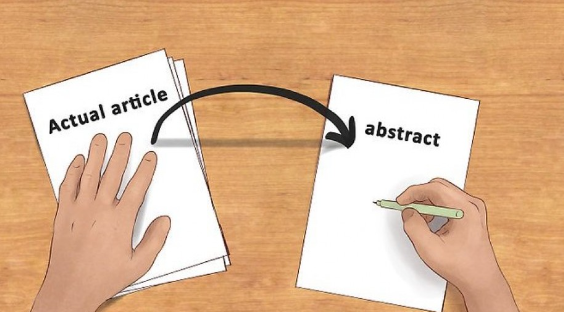
An abstract is a concise summary of a research paper, thesis, article, or other scholarly work. It provides an overview of the main points, findings, and conclusions of the piece, allowing readers to quickly grasp the essential content without having to read the entire document. Typically ranging from 150 to 250 words, abstracts are written in a clear, concise manner and follow a structured format that includes key elements such as the purpose of the study, methods used, results obtained, and conclusions drawn. Abstracts play a crucial role in academic and scientific communication by enabling researchers to share their work with a wider audience and facilitating quick identification of relevant information for readers.
What are The Types of Abstracts?
There are several types of abstracts, each serving different purposes and catering to specific needs within academic and scientific literature. The main types of abstracts include:
- Descriptive Abstracts: These provide a brief overview of the main points of a document, including the purpose, methods, results, and conclusions, without going into extensive detail. Descriptive abstracts are commonly used in academic journals and conference proceedings to help readers quickly assess the relevance of the work.
- Informative Abstracts: Informative abstracts go beyond simply summarizing the main points of a document and provide additional details about the research methods, findings, and conclusions. They aim to give readers a more comprehensive understanding of the work and are often used in longer research papers, theses, and dissertations.
- Structured Abstracts: Structured abstracts follow a specific format or outline, dividing the abstract into sections such as Background, Methods, Results, and Conclusions. This format helps readers quickly locate information relevant to their interests and is commonly used in scientific and medical literature.
- Unstructured Abstracts: Unlike structured abstracts, unstructured abstracts do not follow a specific format and may vary in length and content. They provide a general overview of the main points of a document without strict organizational guidelines.
- Critical Abstracts: Critical abstracts not only summarize the main points of a document but also evaluate the quality and significance of the work. They may include critiques of the research methods, interpretations of the results, and assessments of the overall contribution to the field.
Each type of abstract has its own strengths and limitations, and the choice of which type to use depends on factors such as the purpose of the document, the intended audience, and the conventions of the discipline or publication venue.
Crafting a Captivating Abstract: A Step-by-Step Guide
Here’s your step-by-step guide to writing a stellar abstract:
1. Understand the Purpose:
Before diving in, remember the abstract’s role: to briefly and clearly summarize your work. It should inform readers about the topic, research question, methodology, key findings, and significance. Think of it as a trailer for your research paper.
2. Structure is Key:
Most abstracts follow a structured format that includes four key elements:
- Background: Briefly introduce the topic and highlight existing knowledge.
- Methods: Briefly explain your research methods, whether experiments, surveys, or analyses.
- Results: State your key findings in a concise and objective manner. Avoid excessive details or interpretations.
- Conclusion: Summarize the significance of your work and its contribution to the field.
3. Write after Completing Your Work:
It’s tempting to write the abstract first, but resist the urge! Drafting it after completing your research ensures it accurately reflects your final work and avoids misleading readers.
4. Less is More:
Abstracts are typically short and precise, ranging from 150-250 words. Every word counts, so eliminate unnecessary phrases and focus on conveying the essence of your work.
5. Clarity is Paramount:
Use clear and concise language that everyone in your field can understand. Avoid jargon and complex sentences. Imagine explaining your work to a colleague from a different department.
6. Highlight Your Contribution:
What makes your work unique? Why does it matter? Clearly state the significance of your findings and their contribution to existing knowledge in the abstract’s conclusion.
7. Keywords are Crucial:
Include relevant keywords that accurately represent your research. These help readers discover your work through search engines and databases.
8. Edit, Revise, Repeat:
Just like your main work, your abstract needs thorough editing and revision. Read it aloud to identify awkward phrasing or unclear sentences. Seek feedback from peers or supervisors to ensure clarity and impact.
An Example of a Well-Written Abstract
The Singing City: Exploring the Unexpected Impact of an AI Musical Experiment

In a society increasingly reliant on artificial intelligence, could AI-generated music foster social cohesion and emotional well-being within urban communities? This research explores this question through a unique experiment conducted in the fictional city of Harmonyville. An advanced AI music composer, codenamed “Muse,” was tasked with creating original songs reflecting the diverse cultural mosaic of Harmonyville. These AI-composed pieces were then integrated into public spaces, creating an immersive soundscape throughout the city. Through a mixed-methods approach, including surveys, interviews, and sentiment analysis of social media data, the study examined the impact of this experiment on residents’ sense of community, emotional well-being, and perceived social cohesion. The findings revealed a surprising trend: exposure to the AI-generated music led to a significant increase in feelings of belonging, emotional connection, and positive social interactions among residents. This abstract delves into the potential mechanisms behind these outcomes, suggesting that AI music, designed with cultural sensitivity and community engagement in mind, could offer a novel tool for fostering social connection and enhancing urban well-being.
This example demonstrates the key elements of a good abstract:
- Clearly introduces the topic and research question: Explores the impact of AI music on social cohesion in cities.
- Summarizes methods: Mentions surveys, interviews, and social media analysis.
- Highlights key findings: Increased sense of community and well-being through AI music.
- States significance: Suggests AI music as a tool for social connection in urban contexts.
- Maintains conciseness and clarity: Stays within word limit and uses accessible language.
- Employs strong verbs: “explores,” “reveals,” “suggests.”
A well-written abstract can be the key to unlocking interest in your work. By following these steps and refining your writing skills, you can craft an abstract that effectively highlights your research and draws readers in for a closer look. If you get stuck, we are here to help. Reach out now to elevate your grades and alleviate your academic stress.
FAQs
- What is the purpose of an abstract? An abstract is a concise summary of your research paper, thesis, or presentation. It provides readers with an overview of your topic, methods, key findings, and significance.
- What information should be included in an abstract? Typically, an abstract should include:
- Background: Briefly introduce the topic and its context.
- Methods: Briefly explain how you conducted your research (if applicable).
- Results: State your key findings in a concise and objective manner.
- Conclusion: Summarize the significance of your work and its contribution to the field.
- What is the typical length of an abstract? The length of an abstract can vary depending on the field and specific requirements. However, it usually falls within the range of 150-250 words.
- What are some common mistakes to avoid when writing an abstract? Some common mistakes include:
- Using jargon or technical language that your audience may not understand.
- Including too much detail or unnecessary information.
- Making claims that are not supported by your research.
- Using too much passive voice or weak verbs.
- Overstating the significance of your work.