

Introduction
Writing a research paper involves several crucial steps, and one of the most important aspects is crafting a well-written problem statement. A problem statement provides a clear and concise description of the research problem and serves as the foundation for the entire study. In this comprehensive guide, I will walk you through the process of writing an effective problem statement for your research paper. By following these steps, you will be able to master the art of crafting a problem statement that not only captures the essence of your research but also engages your readers from the very beginning.
Importance of a well-written problem statement
A well-written problem statement is essential for several reasons. Firstly, it helps to establish the relevance and significance of your research. By clearly stating the problem you intend to address, you are able to provide context and justify the need for your study. A well-crafted problem statement also serves as a guide throughout your research, helping you stay focused and on track. Additionally, a problem statement helps to define the scope of your study, ensuring that you do not venture into unrelated or irrelevant areas. Lastly, a well-written problem statement is critical for attracting the attention of readers and potential collaborators, making it an essential component of any research paper.
Components of a problem statement
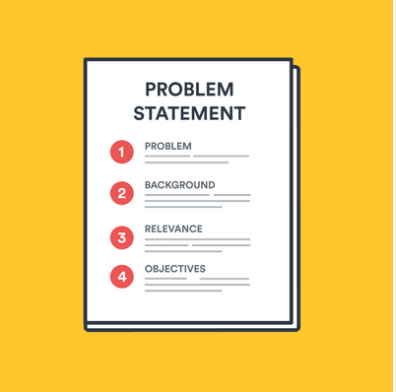
Before we look into the step-by-step process of writing a problem statement, let’s first understand the key components that make up a problem statement. A well-structured problem statement typically consists of the following elements:
- Research problem: This is the central issue or question that your research aims to address. It should be clear, concise, and specific.
- Significance: Explain why the problem is important and how it contributes to the existing body of knowledge. Highlight the potential implications and benefits of solving the problem.
- Context: Provide background information and context to help readers understand the problem and its relevance. This may include citing relevant studies, statistics, or real-world examples.
- Scope: Define the boundaries and limitations of your study. Clearly outline what your research will cover and what it will not cover.
Step 1: Identify the research problem
The first step in writing a problem statement is to identify the research problem. Take some time to reflect on your research topic and identify the specific issue or question that you want to address. This should be a clear and concise statement that captures the essence of your research. Avoid being too broad or too narrow in your problem statement. Aim for a statement that is focused and specific, as this will help guide your research and provide clarity to your readers.
Step 2: Conduct a literature review
Once you have identified the research problem, the next step is to conduct a thorough literature review. This involves reviewing existing research and scholarly articles related to your topic. A literature review will help you gain a deeper understanding of the current state of knowledge in your field and identify any gaps or areas that need further exploration. This step is crucial in ensuring that your research is original and contributes to the existing body of knowledge.
Step 3: Specify the research objectives
After conducting a literature review, it is important to specify the research objectives. These are the specific goals or outcomes that you hope to achieve through your research. Your research objectives should be aligned with your research problem and should be measurable and achievable. Clearly stating your research objectives will help guide your study and provide a clear direction for your research.
Step 4: Formulate research questions
Once you have specified your research objectives, the next step is to formulate research questions. Research questions help to further refine your research and guide your data collection and analysis. Your research questions should be specific, clear, and concise. They should directly address your research problem and align with your research objectives. Formulating well-crafted research questions will help you stay focused and ensure that your research is purposeful and meaningful.
Step 5: Define the scope and limitations
Defining the scope and limitations of your study is an important step in writing a problem statement. This involves clearly outlining what your research will cover and what it will not cover. Be transparent about the boundaries of your study and acknowledge any limitations or constraints that may affect your research. Clearly defining the scope and limitations will help manage expectations and prevent any misunderstandings.
Step 6: Craft the problem statement
Now that you have completed the preliminary steps, it’s time to craft your problem statement. Using the information gathered from the previous steps, write a clear and concise problem statement that captures the essence of your research. Make sure to include the research problem, its significance, the context, and the scope of your study. Aim to create a problem statement that is engaging, informative, and compelling to capture the attention of your readers.
Examples of well-written problem statements

To further illustrate the process of crafting a problem statement, here are a few examples of well-written problem statements:
- Research Problem: “What are the factors contributing to the decline in bee populations in urban areas, and how can urban planning strategies be modified to support bee conservation?”
- Research Problem: “How does social media usage impact the mental health and well-being of adolescents, and what interventions can be implemented to promote positive mental health outcomes?”
- Research Problem: “What are the barriers to the adoption of renewable energy technologies in developing countries, and how can policy frameworks be designed to overcome these barriers?”
Common mistakes to avoid when writing a problem statement

While crafting a problem statement, it is important to avoid common mistakes that can undermine the effectiveness of your research. Here are a few common mistakes to avoid:
- Being too vague or broad in your problem statement. Be specific and focused.
- Failing to provide sufficient background information and context. Help your readers understand the problem and its significance.
- Neglecting to define the scope and limitations of your study. Clearly outline what your research will cover and what it will not cover.
- Overlooking the importance of aligning your research objectives and research questions with your problem statement. Ensure that all elements of your research are coherent and connected.
Conclusion
Crafting a well-written problem statement is an essential step in the research process. By following the step-by-step guide outlined in this article, you will be able to write a problem statement that is clear, concise, and engaging. Remember to identify the research problem, conduct a literature review, specify the research objectives, formulate research questions, define the scope and limitations, and craft the problem statement. By mastering the art of writing a problem statement, you will be well-equipped to embark on your research journey and contribute to the body of knowledge in your field. So, what are you waiting for? Start writing your problem statement today and make a meaningful impact with your research.
By following these tips, you can craft a compelling and effective problem statement that sets the stage for your research or project. If you need assistance in crafting a compelling problem statement or with any other assignment, don’t hesitate to contact us for expert and prompt help.
FAQs
1. What is a problem statement?
A problem statement is a clear and concise description of an issue that needs to be solved. It frames the problem in a way that highlights its significance and motivates further action such as research, development, or intervention.
2. What are the key components of a well-written problem statement?
- Clarity: The problem is clearly defined and easy to understand.
- Specificity: The statement identifies the specific issue, who is affected, and the context.
- Impact: The problem’s importance and consequences are explained.
- Objectivity: The statement is neutral and avoids blaming or assigning fault.
- Actionable language: The statement encourages potential solutions or further investigation.
3. What are some common mistakes to avoid when writing a problem statement?
- Vagueness: Avoid using unclear or overly broad language.
- Focus on symptoms: Don’t simply describe the effects of the problem without addressing its root cause.
- Stating a solution: The problem statement should focus on the issue, not the potential solution.
- Unnecessary details: Avoid including irrelevant information that doesn’t directly relate to the problem.
4. How can I write a problem statement for different purposes (e.g., research, design, business)?
While the core elements remain the same, the specific framing of the problem statement might vary depending on the purpose.
- For research: Focus on highlighting knowledge gaps, understanding the causes, and investigating potential solutions.
- For design: Frame the problem in terms of user needs, challenges with existing solutions, and the desired outcome of the design.
- For business: Emphasize the impact on the company, target audience, or market, highlighting the need for improvement or innovation.
5. Where can I find more information and examples of problem statements?
- Your university writing center or library might offer resources and workshops on writing problem statements.
- Numerous online resources and guides exist, such as university websites, writing center websites, and educational platforms.
- Look for examples of research papers, design projects, or business proposals relevant to your field.