

Are you puzzled by the various sampling methods used in research? Do you find yourself wondering which method is the most effective for your study? Understanding sampling methods is crucial for ensuring the validity and reliability of research outcomes.
The selection of a representative subset of data from a larger population, known as sampling, is a crucial aspect of research. It is imperative to understand the nuances, advantages, and limitations of various sampling methods to make an informed decision. A wide range of sampling methods are available, including probability, non-probability, and mixed methods, each with its unique characteristics. In this guide, we will explore the world of sampling methods. We will provide an in-depth analysis of various sampling methods to help you gain valuable insights into selecting the right sampling method for your research.

What is Sampling
Sampling refers to the process of selecting a subset of individuals or items from a larger population to represent that population for research or statistical analysis purposes. It allows researchers to gather information and draw conclusions about the entire population without having to study every single member. Sampling is essential in various fields such as sociology, psychology, market research, and epidemiology, where it helps in making inferences and generalizations about a population based on the characteristics of the sample.
Key Terms Used in Sampling
When dealing with sampling, you’ll encounter several key terms. Here are some of the most important ones:
Population: This refers to the entire group of individuals or items you’re interested in studying. It can be large and often impractical to study in its entirety.
Sample: This is a subset of the population that you actually select for your study. It is a smaller, manageable group that you use to draw conclusions about the wider population.
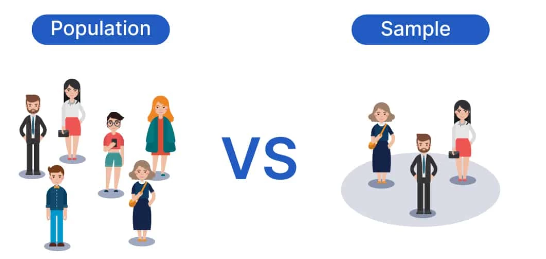
Unit: Each individual element within the population is considered a unit. For instance, in a study of students, each student would be a unit.
Sample Frame: This is a list or database containing all the units in the population from which you can potentially draw your sample. It’s like a pool of candidates for your study.
Sample Size: This refers to the number of units you choose to include in your sample. Determining the appropriate size depends on factors like the desired level of accuracy and the variability within the population.
Strata: Sometimes, the population can be divided into subgroups based on shared characteristics, like age group, income level, or location. These subgroups are called strata.
Sampling Method: This refers to the specific technique used to select your sample from the population. Different methods offer varying levels of randomness and representativeness, impacting the validity of your conclusions. Common methods include:
- Simple Random Sampling: Each unit has an equal chance of being chosen.
- Stratified Random Sampling: The population is divided into strata, and a random sample is drawn from each stratum.
- Systematic Sampling: Units are chosen at regular intervals from a list of the population.
- Cluster Sampling: Groups of units (clusters) are chosen, and then individuals from those clusters are selected.
Sampling Error: This refers to the inherent difference between the characteristics of your sample and the true characteristics of the entire population. It’s unavoidable but can be minimized by choosing a good sampling method and a large enough sample size.
Sampling Bias: This occurs when your sample is not representative of the entire population, leading to inaccurate conclusions. It can arise due to factors like non-random sampling methods, poorly defined population boundaries, or voluntary participation in surveys.
Probability Sampling Methods
Probability sampling methods are techniques used to select a representative sample from a population, where each member of the population has a known and non-zero chance of being chosen. This selection process is based on randomization, ensuring unbiased conclusions can be drawn about the entire population based on the characteristics observed in the sample. Here’s a description of four common probability sampling methods:
1. Simple Random Sampling:
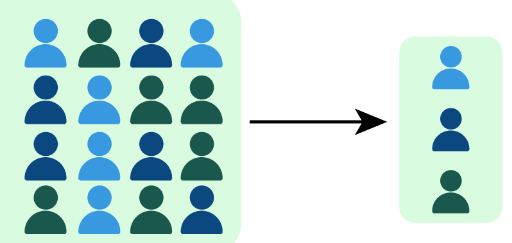
This is the most basic and straightforward probability sampling method. Every member of the population has an equal chance of being selected, meaning each unit has the same probability (1/N), where N is the total population size. Selection is typically done through a random number generator or random drawing from a list of all units.
Advantages:
- Easy to implement and understand.
- Unbiased if done correctly.
- Requires only a complete list of the population (sampling frame).
Disadvantages:
- May not be feasible for very large populations due to logistical challenges.
- May not be representative if the population is highly diverse or sub-groups are not well-mixed.
2. Stratified Random Sampling:
This method is used when the population can be divided into sub-groups (strata) based on important characteristics, such as age, gender, occupation, or income level. The population is first divided into these strata, ensuring each stratum is proportionally represented in the final sample. Random selection is then applied within each stratum to ensure each unit within the stratum has an equal chance of being chosen.
Advantages:
- Ensures representation of important sub-groups in the sample, leading to more accurate conclusions.
- Useful for studying specific sub-populations within a larger group.
Disadvantages:
- Requires prior knowledge of the relevant sub-groups and their proportions within the population.
- Can be more complex to implement than simple random sampling.
3. Systematic Sampling:
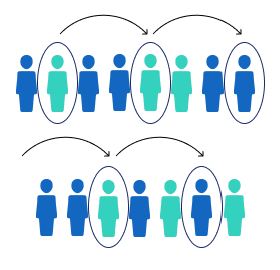
This method involves selecting units at regular intervals from a complete list of the population (sampling frame). First, a random starting point is chosen within the list, and then every kth unit after that starting point is included in the sample, where k is the desired sample size divided by the population size.
Advantages:
- Relatively easy to implement and efficient, especially with large populations.
- Requires only a complete list of the population.
Disadvantages:
- May not be unbiased if the underlying list has inherent patterns (e.g., alphabetical order).
- May under-represent or over-represent certain sub-groups within the population if they are not evenly distributed in the list.
4. Cluster Sampling:
This method is used when the population is naturally divided into groups or clusters (e.g., schools, cities, departments). Instead of selecting individual units, clusters are randomly selected, and then all units within the chosen clusters are included in the sample.
Advantages:
- Useful when it is difficult or expensive to obtain a complete list of individual units within the population.
- Can be more efficient than sampling individual units, especially for geographically dispersed populations.
Disadvantages:
- May be less precise than other methods due to the lack of random selection within each cluster.
- Requires careful selection of clusters to ensure they are representative of the entire population.
Choosing the right probability sampling method:
The best method for your specific study depends on various factors, including:
- The nature of your population: Is it well-defined and easy to access? Is it diverse or does it have well-defined sub-groups?
- Your research objectives: Are you interested in the overall population or specific sub-groups?
- Available resources: Do you have access to a complete list of the population? Are there budget and logistical constraints?
Non-Probability Sampling Methods
Non-probability sampling methods select samples based on the researcher’s judgment or convenience, rather than random selection. While these methods are not ideal for drawing statistically generalizable conclusions about the entire population, they can be valuable tools for exploratory research, pilot studies, or situations where random sampling is impractical. Here’s a description of five common non-probability sampling methods:
1. Convenience Sampling (Haphazard Sampling):
This method involves selecting individuals who are readily available or easy to access. It often involves using participants readily available to the researcher, like students in a classroom or volunteers at a community event.
Advantages:
- Easy and inexpensive to conduct.
- Useful for pilot studies or exploratory research.
Disadvantages:
- Samples are not representative of the population, leading to biased results.
- Cannot be used to generalize findings to a larger population.
2. Judgmental Sampling (Purposive Sampling):
This method relies on the researcher’s expertise and judgment to select individuals who are considered knowledgeable or representative of the population under study. The researcher chooses individuals believed to offer valuable insights into the research question.
Advantages:
- Useful for gathering in-depth information from individuals with specific knowledge or experience.
- Can be efficient for targeted research.
Disadvantages:
- Relies heavily on the researcher’s judgment, which can introduce bias.
- Difficult to justify how the chosen sample truly represents the population.
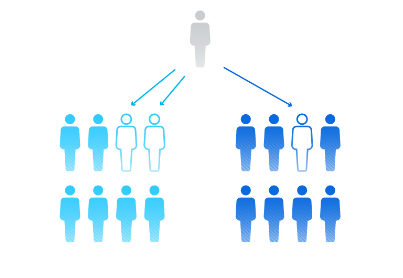
3. Quota Sampling:
This method involves dividing the population into subgroups (quotas) based on predetermined characteristics like age, gender, or occupation. The researcher then sets quotas for each sub-group and selects individuals who fit those quotas until the desired sample size is reached.
Advantages:
- Can ensure representation of specific sub-groups in the sample, even if they are not randomly chosen.
- Useful for studies where understanding sub-group differences is important.
Disadvantages:
- Does not guarantee representativeness within each sub-group.
- Can be subjective in choosing individuals within each quota.
4. Snowball Sampling:
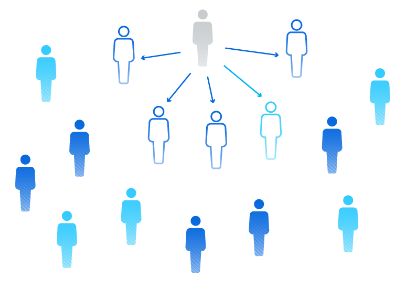
This method relies on existing participants to refer others who meet the study criteria. The researcher starts with a few individuals and asks them to identify others in their network who would be suitable for the study. This process continues progressively, like a snowball rolling down a hill.
Advantages:
- Useful for reaching hard-to-reach populations or those with specific characteristics.
- Can be cost-effective and efficient once the initial connections are made.
Disadvantages:
- Sample is likely to be biased towards individuals with similar characteristics to the initial participants.
- Difficult to assess the representativeness of the final sample.
5. Volunteer Sampling (Self-Selection Sampling):
This method involves selecting individuals who volunteered to participate in the study. It often involves placing advertisements, sending emails, or using online platforms to recruit participants.
Advantages:
- Easy to implement and often leads to a large number of potential participants.
- Useful for quick data collection or online surveys.
Disadvantages:
- Samples are likely to be biased towards individuals who are interested in the topic or have specific characteristics.
- Non-respondents may differ significantly from the respondents, leading to biased results.
Choosing the right non-probability sampling method:
The appropriate non-probability method depends on your specific research objectives and limitations. Remember, these methods are not intended for drawing statistically generalizable conclusions. Use them primarily for exploratory research, pilot studies, or situations where random sampling is not feasible.
By understanding the advantages and disadvantages of each method, researchers can choose the most appropriate probability sampling technique to ensure their study results are reliable and generalizable to the entire population. Ready to optimize your sampling method? Contact us for expert guidance and elevate your research today!
FAQs
1. What is sampling?
Sampling is the process of selecting a subset of individuals or items from a larger population to study the characteristics of the whole group. It is widely used in various fields, including research, marketing, and quality control.
2. Why do we use sampling?
- Studying the entire population can be impractical, time-consuming, and expensive. Sampling allows researchers to gather representative data efficiently and cost-effectively.
- Sampling allows researchers to focus on specific sub-groups within the population.
3. What are the different types of sampling?
There are two main categories:
- Probability Sampling: Each member of the population has a known and non-zero chance of being selected. This ensures unbiased results and allows for generalizability to the population. Examples include simple random sampling, stratified random sampling, systematic sampling, and cluster sampling.
- Non-Probability Sampling: Selection is based on the researcher’s judgment or convenience, not random selection. These methods are not ideal for generalizing findings but can be valuable for exploratory research or pilot studies. Examples include convenience sampling, judgmental sampling, quota sampling, snowball sampling, and volunteer sampling.
4. What are some key terms related to sampling?
- Population: The entire group you are interested in studying.
- Sample: The subset of the population you actually select for your study.
- Sample Size: The number of units included in your sample.
- Sampling Frame: A list or database containing all units in the population from which you can potentially draw your sample.
- Sampling Bias: When your sample is not representative of the entire population, leading to inaccurate conclusions.
5. How do I choose the right sampling method?
The best method depends on several factors, including:
- The nature of your population: Is it well-defined and easy to access? Is it diverse?
- Your research objectives: Are you interested in the overall population or specific sub-groups?
- Available resources: Do you have access to a complete list of the population? Are there budget and logistical constraints?
6. What are the limitations of sampling?
- Sampling error: The inherent difference between the characteristics of your sample and the true characteristics of the entire population. It’s unavoidable but can be minimized with good sampling methods and large sample sizes.
- Sampling bias: If the sample is not representative, it can lead to inaccurate conclusions.
7. What resources can I use to learn more about sampling?
- Your local library or university library may have books and articles on research methods and sampling.