

In the vast landscape of literature, prose poetry stands as a unique and captivating form of artistic expression. Combining the fluidity of prose with the lyrical qualities of poetry, prose poetry offers writers a versatile medium to explore themes, evoke emotions, and engage readers in profound and immersive narratives. In this paper, we will look into the world of prose poetry by examining notable literary pieces written in this genre. Through analysis and exploration, we aim to uncover the richness and diversity of prose poetry as exemplified by these masterful works.
1. “The Snow Man” by Wallace Stevens
Overview
“The Snow Man” by Wallace Stevens is a celebrated example of prose poetry, renowned for its philosophical depth and vivid imagery. Published in 1921 as part of Stevens’ collection “Harmonium,” this poem explores themes of perception, reality, and the human experience through the lens of a solitary figure standing in a wintry landscape.
Analysis
Stevens employs a unique style in “The Snow Man,” utilizing prose-like syntax and a narrative structure that allows the poem to unfold seamlessly. This approach creates a sense of fluidity and continuity, inviting readers to immerse themselves in the vivid imagery and philosophical musings presented.
The poem opens with a captivating description of a winter scene, where “the only other sound’s the sweep / Of easy wind and downy flake.” Stevens immediately establishes a sense of stillness and isolation, setting the stage for the speaker’s contemplations. Through rich and evocative imagery, he transports readers into a world of “misery in the sound of the wind,” where the snow falls “crusting / With vigor” onto the speaker’s shoulders and arms.
As the poem progresses, Stevens looks deeper into the speaker’s musings on perception and reality. The speaker observes that “the mind of the beholding man is blessed with a newfound knowledge,” suggesting a profound understanding or realization about the nature of existence and the act of perception itself.
The speaker’s detachment from the external world is further emphasized through the striking line, “For the listener, who listens in the snow, / And, nothing himself, beholds / Nothing that is not there and the nothing that is.” This paradoxical statement challenges the reader’s understanding of reality and perception, inviting them to question the boundaries between what is and what is not.
Throughout the poem, Stevens masterfully juxtaposes the concrete imagery of the wintry landscape with the abstract concepts of existence, perception, and the human experience. The speaker’s journey culminates in a state of oneness with the environment, where “Enough / Is enough for him, himself it outdistancing / Itself, or something like that, and everything / Is self-explaining, everything that is.”
In “The Snow Man,” Stevens invites readers to contemplate the profound questions of existence and perception, using the stark and desolate winter landscape as a canvas for his philosophical musings. Through his masterful use of language and imagery, he challenges conventional notions of reality and encourages readers to embrace the complexities and contradictions inherent in the act of perception.
Citation
Stevens, Wallace. “The Snow Man.” Poetry Foundation.
2. “The Red Wheelbarrow” by William Carlos Williams
Overview
“The Red Wheelbarrow” is a quintessential example of imagist poetry, characterized by its succinctness, precision, and focus on sensory detail. Written by William Carlos Williams and first published in 1923 in his collection “Spring and All,” this 16-word poem exemplifies the beauty found in simplicity and everyday objects.
Analysis
While “The Red Wheelbarrow” may appear, at first glance, to be a straightforward observation of a mundane scene, its brevity and precise language imbue it with profound significance. Williams’s use of a prose-like structure, devoid of traditional poetic devices such as rhyme or meter, enhances the poem’s accessibility and invites readers to contemplate the interconnectedness of humanity and the natural world.
The poem opens with a striking visual image: “so much depends / upon.” This phrase immediately captures the reader’s attention and suggests that something of great importance is about to be revealed. Williams then presents the central image of the poem, “a red wheel / barrow,” an ordinary object that takes on symbolic weight through its vivid description and the emphasis placed upon it.
The following lines, “glazed with rain / water,” introduce a sensory element, inviting the reader to envision the glistening surface of the wheelbarrow after a rainstorm. This image not only adds a layer of detail but also suggests themes of renewal and the cyclical nature of life.
The final two lines, “beside the white / chickens,” introduce a contrasting element to the scene, juxtaposing the vibrant red of the wheelbarrow with the pure white of the chickens. This contrast creates a sense of balance and harmony, further emphasizing the interconnectedness of the natural and human-made elements within the scene.
Despite its simplicity, “The Red Wheelbarrow” is a masterful example of the imagist technique, distilling complex ideas and emotions into a concise, visual representation. Williams’s careful selection of words and his emphasis on sensory detail invite readers to engage with the poem on a deeper level, encouraging them to contemplate the significance of seemingly mundane objects and the profound beauty that can be found in the ordinary.
Through its economy of language and its vivid imagery, “The Red Wheelbarrow” challenges traditional notions of what constitutes poetry and encourages readers to appreciate the beauty and complexity that can be found in the seemingly mundane aspects of everyday life.
Citation
Williams, William Carlos. “The Red Wheelbarrow.” Poetry Foundation
3. “A Dream Within a Dream” by Edgar Allan Poe
Overview
“A Dream Within a Dream” is a haunting and introspective poem written by Edgar Allan Poe, exploring the complex themes of illusion, reality, and the relentless passage of time. First published in 1849 as part of Poe’s poetry collection “Poems,” this work showcases the author’s mastery of language and imagery in conveying profound philosophical musings.
Analysis
While “A Dream Within a Dream” is often categorized as a poem, its prose-like structure and narrative tone align it closely with the conventions of prose poetry. Poe employs a fluid, rhythmic language that flows seamlessly, blurring the boundaries between verse and prose. This distinctive style allows him to weave a dream-like tapestry of words, inviting readers to ponder the elusive nature of truth and the fragility of human existence.
The poem opens with a striking image of the speaker holding grains of sand, which slip through his fingers, serving as a powerful metaphor for the fleeting nature of life and the impossibility of grasping onto reality. Poe’s use of vivid sensory details, such as “the pitiless wave” and “the mocking pave,” adds depth and texture to the scene, immersing the reader in the speaker’s existential crisis.
As the poem progresses, the speaker’s questioning becomes more urgent, as he wrestles with the notion of whether life itself is merely a “dream within a dream.” Poe’s masterful use of repetition and rhetorical questions heightens the sense of disorientation and uncertainty, mirroring the speaker’s own psychological state.
Underlying the poem’s exploration of reality and illusion is a pervasive sense of melancholy and mortality. The speaker’s realization that “all that we see or seem / Is but a dream within a dream” carries a profound weight, suggesting the futility of human existence and the inevitability of death.
Citation
Poe, Edgar Allan. “A Dream Within a Dream.” Poetry Foundation.
Do you need help with poetry analysis?
Our expert team can guide you through understanding themes, symbolism, and literary devices. Contact us today to enhance your appreciation and interpretation of poetry
4. “Self-Portrait in a Convex Mirror” by John Ashbery
Overview
“Self-Portrait in a Convex Mirror” is a seminal prose poem written by John Ashbery, published in 1975 as part of his acclaimed collection “Self-Portrait in a Convex Mirror.” This enigmatic and introspective work explores the profound themes of identity, perception, and the elusive nature of selfhood. Ashbery’s masterful blending of poetic and prosaic elements earned him the prestigious Pulitzer Prize for Poetry in 1976, cementing his place as a leading voice in the realm of contemporary American poetry.
Analysis
Ashbery’s use of prose-like syntax and structure allows “Self-Portrait in a Convex Mirror” to unfold as a reflective and meandering exploration of consciousness. The poem’s nonlinear narrative and fragmented imagery mirror the complexities of human experience and the fluidity of identity, inviting readers to embark on a journey of self-discovery and introspection.
The poem opens with a striking description of the convex mirror itself, a physical object that serves as a metaphor for the distorted and multifaceted nature of self-perception. Ashbery’s vivid imagery invites the reader to contemplate the relationship between reality and representation, as the mirror reflects a “reverted” and “diminished” version of the subject.
As the poem progresses, Ashbery’s language becomes increasingly abstract and enigmatic, weaving together disparate threads of thought and perception. His skillful use of juxtaposition and paradox challenges the reader’s understanding of identity, suggesting that the self is a fluid and ever-evolving construct, shaped by the interplay of internal and external forces.
Through his masterful command of language and form, Ashbery creates a sense of disorientation and ambiguity, mirroring the speaker’s own struggle to grasp the elusive nature of selfhood. The poem’s fragmentary structure and lack of a linear narrative invite multiple interpretations, encouraging readers to engage with the work on a deeply personal level.
Underlying Ashbery’s exploration of identity and perception is a profound examination of the human condition. The speaker’s musings on the fleeting nature of existence and the inevitability of change resonate with a sense of melancholy and existential longing, reflecting the enduring themes that have preoccupied philosophers and poets throughout history.
“Self-Portrait in a Convex Mirror” stands as a testament to Ashbery’s innovative approach to poetic form and his ability to capture the complexities of human experience with a rare depth and insight. Through his seamless blending of prose and poetry, Ashbery invites readers to embark on a journey of self-discovery, challenging them to confront the paradoxes and contradictions that lie at the heart of the human condition.
Citation
Ashbery, John. “Self-Portrait in a Convex Mirror.” Poetry Foundation.
5. “The Waste Land” by T.S. Eliot
Overview
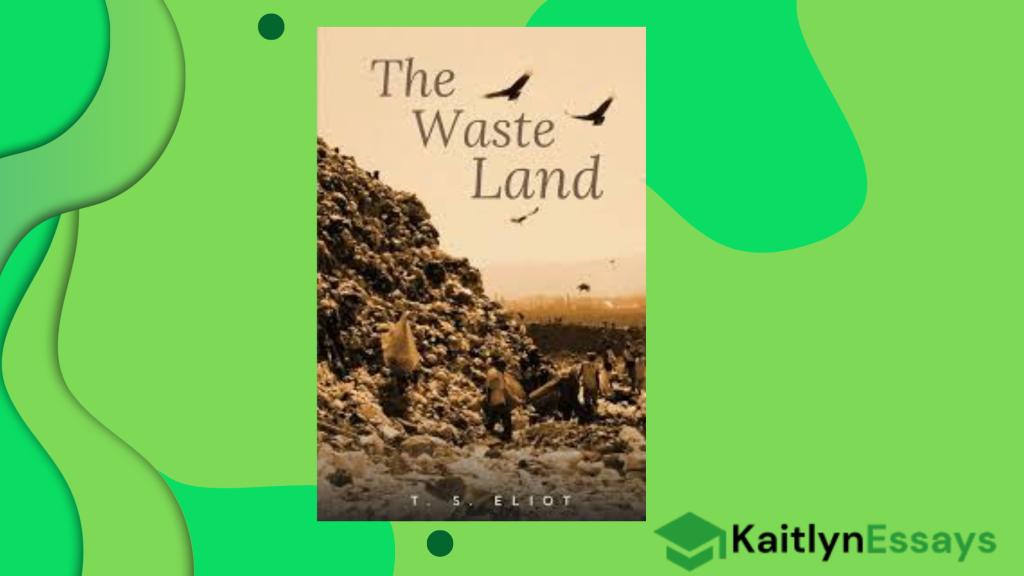
“The Waste Land” is a landmark work of modernist literature written by T.S. Eliot and published in 1922. Widely regarded as one of the most significant and influential poetic works of the 20th century, this epic poem incorporates elements of prose-like structure and narrative complexity, blurring the boundaries between poetry and prose.
Analysis
Eliot’s “The Waste Land” is renowned for its fragmented form and multifaceted narrative, weaving together various voices, cultural references, and literary allusions. Through its prose-like sections interspersed with poetic fragments, the poem offers a kaleidoscopic vision of a fragmented and disillusioned post-World War I society, grappling with themes of disillusionment, spiritual aridity, and the search for meaning in a rapidly modernizing world.
The poem opens with the haunting lines “April is the cruellest month,” immediately establishing a tone of existential angst and disenchantment. Eliot’s masterful use of poetic devices, such as allusion, symbolism, and imagery, creates a rich tapestry of meaning that invites multiple interpretations and close reading.
Throughout “The Waste Land,” Eliot seamlessly blends poetic and prosaic elements, juxtaposing lyrical passages with sections that read like prose narratives or dramatic monologues. This innovative approach to form mirrors the fractured nature of the modern experience, as the poem shifts between various perspectives, voices, and temporal and spatial settings.
Eliot’s incorporation of diverse cultural and literary references, ranging from Eastern mysticism to Shakespearean drama, adds layers of complexity and depth to the work. These references serve not only as a testament to Eliot’s vast erudition but also as a means of exploring the universal themes that transcend cultural boundaries.
At the heart of “The Waste Land” lies a profound exploration of the human condition, as Eliot grapples with questions of identity, spirituality, and the search for meaning in a world that has lost its sense of unity and purpose. The poem’s fragmented structure and nonlinear narrative reflect the disjointed nature of modern existence, challenging readers to piece together the disparate elements and find their own path through the wasteland.
Through his innovative blending of poetic and prosaic forms, Eliot created a work that defied traditional literary conventions and paved the way for new modes of poetic expression. “The Waste Land” stands as a testament to Eliot’s literary genius and his ability to capture the complexities and contradictions of the modern experience with unparalleled depth and insight.
Citation
Eliot, T.S. “The Waste Land.” Poetry Foundation.
6. “In the Station of the Metro” by Ezra Pound
Overview
“In the Station of the Metro” is a concise and evocative poem written by Ezra Pound, first published in 1913 in the literary magazine “Poetry.” Often cited as an exemplar of imagist poetry, this brief piece captures a fleeting moment of urban modernity and sensory experience with remarkable economy and precision.
Analysis
Pound’s use of spare and precise language in “In the Station of the Metro” creates a vivid and atmospheric portrait of a bustling subway station, inviting the reader to experience a snapshot of metropolitan life through a series of carefully curated images and impressions. While the poem consists of only two lines, its prose-like structure and vivid imagery evoke a sense of immediacy and impressionistic detail.
The opening line, “The apparition of these faces in the crowd,” immediately transports the reader into a crowded metropolitan space, where faces appear and disappear in a rapid succession of fleeting glimpses. Pound’s use of the word “apparition” lends a sense of ghostliness and ephemerality to the scene, suggesting the transient nature of urban existence.
The second line, “Petals on a wet, black bough,” introduces a striking contrast between the organic and the industrial, juxtaposing the delicate beauty of flower petals with the gritty, urban imagery of a “wet, black bough.” This juxtaposition creates a powerful metaphor, inviting the reader to contemplate the fragility of nature in the face of modernity and the coexistence of beauty and decay within the urban landscape.
Through his masterful use of imagery and metaphor, Pound captures the essence of the modern city, where moments of beauty and transcendence are fleeting and often overshadowed by the relentless pace of urban life. The poem’s brevity and concision mirror the fleeting nature of the experience it depicts, inviting the reader to linger in the moment and appreciate the poignancy of its imagery.
Despite its compact form, “In the Station of the Metro” carries a profound weight and depth, reflecting Pound’s commitment to the imagist principles of precision, clarity, and economy of language. By stripping away superfluous elements and focusing on the essentials of sensory experience, Pound creates a work that resonates with a sense of universality and timelessness.
“In the Station of the Metro” stands as a testament to Pound’s innovative approach to poetic form and his ability to capture the complexities of modern existence within the confines of a brief, prose-like structure. Through its vivid imagery and metaphorical richness, this poem invites readers to engage with the world around them in a new and profound way, challenging them to appreciate the fleeting moments of beauty and meaning that permeate even the most mundane of urban experiences.
Citation
Pound, Ezra. “In the Station of the Metro.” Poetry Foundation.
7. “A House on the Ocean, a House on the Bay” by Margaret Atwood
Overview
“A House on the Ocean, a House on the Bay” is a poignant and introspective prose poem written by Margaret Atwood, included in her acclaimed collection “Morning in the Burned House,” published in 1995. This evocative piece reflects on the profound themes of memory, identity, and the inexorable passage of time, inviting readers to contemplate the intricate tapestry of human experience.
Analysis
In “A House on the Ocean, a House on the Bay,” Atwood’s prose poem unfolds as a series of vignettes, each one imbued with a palpable sense of nostalgia and longing. Through her masterful command of language and vivid descriptions, Atwood invites readers to embark on a journey through the shifting landscapes of memory, where past and present intertwine in a complex and deeply personal exploration of identity.
The poem opens with a striking image of two houses, one by the ocean and one by the bay, immediately establishing a dichotomy that resonates throughout the work. This contrast between the two settings serves as a metaphor for the duality of human experience, where the ebb and flow of memories shape our understanding of the self.
As the poem progresses, Atwood weaves a tapestry of introspective musings and sensory details, inviting readers to immerse themselves in the rich tapestry of her poetic world. Her vivid descriptions of the natural elements, such as the “wind off the water” and the “salt-spray,” evoke a sense of nostalgia and longing for a time and place that exists only in the realm of memory.
Atwood’s masterful use of language and imagery creates a dreamlike quality, blurring the boundaries between reality and reminiscence. The poem’s prose-like structure allows for a fluidity of thought and a sense of narrative progression, as Atwood guides readers through a labyrinth of recollections and introspections.
Underlying the poem’s exploration of memory and identity is a profound meditation on the passage of time and the ephemeral nature of human existence. Atwood’s poetic voice resonates with a sense of melancholy and acceptance, acknowledging the inevitability of change while celebrating the enduring power of memory to shape our understanding of the self.
Through her innovative blending of poetic and prosaic elements, Atwood creates a work that defies traditional literary conventions, inviting readers to engage with the complexities of human experience on a deeply personal and emotive level. “A House on the Ocean, a House on the Bay” stands as a testament to Atwood’s literary mastery and her ability to capture the nuances of human emotion and psychology with a rare depth and sensitivity.
Citation
Atwood, Margaret. “A House on the Ocean, a House on the Bay.” Poetry Foundation.
8. “Twenty-One Love Poems” by Adrienne Rich
Overview
“Twenty-One Love Poems” is a seminal collection of poems written by Adrienne Rich and published in 1976. This groundbreaking work not only solidified Rich’s reputation as a leading voice in contemporary American poetry but also challenged conventional notions of love, desire, and identity. While not exclusively prose poetry, the collection features several pieces that blur the boundaries between prose and verse, inviting readers to embark on a deeply personal and introspective exploration of the human experience.
Analysis
In “Twenty-One Love Poems,” Rich embraces a range of poetic forms, seamlessly weaving together lyrical passages with prose-like narratives and intimate reflections. This innovative approach to structure and style mirrors the complexities of the themes she explores, allowing her to capture the multifaceted nature of love, desire, and identity with remarkable depth and nuance.
Several of the poems in the collection are written in a prose-like style, unfolding as introspective vignettes or stream-of-consciousness narratives. These pieces invite readers to immerse themselves in the rich tapestry of Rich’s poetic voice, as she navigates the intricate landscapes of the heart and mind.
Through raw emotion and lyrical language, Rich captures the complexities of intimate relationships, offering readers a glimpse into the depths of the human heart. Her poems confront the paradoxes of love – its intensity and fragility, its capacity for both ecstasy and pain – with unflinching honesty and vulnerability.
Underlying Rich’s exploration of love and desire is a profound examination of identity, particularly in relation to gender and societal expectations. Her poems challenge traditional gender roles and societal norms, inviting readers to reimagine the boundaries of love and to embrace the fluidity of human experience.
Rich’s innovative use of language and form in “Twenty-One Love Poems” creates a sense of immediacy and intimacy, as if the reader is privy to the innermost thoughts and emotions of the poet. Her use of sensory details and evocative imagery heightens the visceral impact of her words, allowing readers to connect with the poems on a deeply personal level.
Through her seamless blending of poetic and prosaic elements, Rich writes a work that defies traditional literary conventions, inviting readers to engage with the complexities of the human experience in a profoundly intimate and revelatory way. “Twenty-One Love Poems” stands as a testament to Rich’s literary genius and her ability to capture the nuances of love, desire, and identity with unparalleled insight and emotional resonance.
Citation
Rich, Adrienne. “Twenty-One Love Poems.” Poetry Foundation.
9. “Autobiography of Red” by Anne Carson
Overview
“Autobiography of Red” is a groundbreaking hybrid novel-in-verse written by Anne Carson and published in 1998. This experimental work blurs the boundaries between prose and poetry, reimagining the ancient Greek myth of Geryon, a winged red monster, and exploring profound themes of identity, desire, and transformation. Carson’s innovative approach to form and structure has earned “Autobiography of Red” widespread critical acclaim and cemented her reputation as one of the most daring and original voices in contemporary literature.
Analysis
In “Autobiography of Red,” Carson seamlessly weaves together prose-like narratives with poetic fragments, creating a lyrical and fragmented tapestry that mirrors the complexities of the human experience. The novel-in-verse unfolds as a series of vignettes, each offering a unique perspective on the life and struggles of Geryon, the red-winged monster who serves as the central protagonist.
Carson’s masterful use of language and imagery is evident throughout the work, as she employs evocative metaphors and vivid sensory details to breathe life into the mythological world she explores. Her poetic voice resonates with a raw authenticity, capturing the visceral emotions and desires that lie at the heart of the human condition.
Through the lens of Geryon’s journey, Carson examines the profound questions of identity and self-discovery. The novel-in-verse explores the complexities of gender, sexuality, and the inherent fluidity of the self, inviting readers to challenge societal norms and embrace the multifaceted nature of human identity.
Carson’s innovative structure and nonlinear narrative style mirror the fragmented and ever-evolving nature of identity itself. The prose-like passages offer a grounding in narrative and character development, while the poetic fragments create moments of lyrical intensity and emotional resonance.
Underlying the work’s exploration of identity and desire is a profound meditation on the transformative power of art and storytelling. Carson’s reimagining of the Geryon myth serves as a metaphor for the creative process, inviting readers to embrace the transformative potential of literature to shape our understanding of the world and our place within it.
Through her seamless blending of poetic and prosaic elements, Carson creates a work that defies traditional literary conventions, inviting readers to engage with the complexities of the human experience in a profoundly innovative and imaginative way. “Autobiography of Red” stands as a testament to Carson’s literary genius and her ability to push the boundaries of form and content, offering readers a transformative journey through the realms of myth, identity, and the enduring power of storytelling.
Citation
Carson, Anne. “Autobiography of Red.” Vintage, 1998.
10. “Cane” by Jean Toomer
Overview
“Cane” is a groundbreaking and genre-defying work of literature written by Jean Toomer and published in 1923. Hailed as a masterpiece of the Harlem Renaissance, this hybrid text blends poetry, prose, and drama to create a multifaceted and lyrical exploration of the lives of African Americans in the early 20th century American South and North. Toomer’s innovative approach to form and structure has earned “Cane” a place as a seminal work in the literary canon, pushing the boundaries of what literature can achieve.
Analysis
At its core, “Cane” is a profound meditation on the complexities of identity, community, and the human experience, rendered through a tapestry of diverse literary forms. Toomer seamlessly weaves together prose-like narratives with poetic interludes and dramatic sketches, creating a richly textured and multidimensional work that defies traditional genre classifications.
The prose sections of “Cane” are particularly noteworthy for their evocative and lyrical quality, conveying the rhythms, textures, and cadences of Southern life with remarkable precision and depth. Toomer’s mastery of language is evident in his ability to capture the nuances of dialect, vernacular speech, and the rich cultural heritage of the African American communities he depicts.
Throughout these prose-like sections, Toomer employs vivid imagery and sensory details to transport readers into the heart of the Southern landscape, evoking the sights, sounds, and smells of a world that is both familiar and profoundly enigmatic. His descriptions of rural towns, fields, and forests are imbued with a sense of mysticism and spirituality, reflecting the deep connections between the land and the people who inhabit it.
Interspersed with these narrative sections are poetic interludes that serve as emotional and spiritual counterpoints, offering glimpses into the inner lives and psyches of Toomer’s characters. These poetic fragments are often abstract and metaphorical, inviting readers to engage with the work on a deeper, symbolic level.
Through his innovative blending of poetic and prosaic elements, Toomer creates a multidimensional portrait of a community in transition, grappling with the complexities of race, identity, and the ever-shifting landscapes of modernity. “Cane” challenges readers to confront the contradictions and paradoxes that lie at the heart of the human experience, inviting them to embrace the fluidity and multifaceted nature of identity itself.
“Cane” stands as a testament to Toomer’s literary genius and his ability to push the boundaries of form and content. By weaving together diverse literary traditions and styles, Toomer created a work that transcends traditional genre classifications and offers a profound and enduring exploration of the human experience in all its complexity and beauty.
Citation
Toomer, Jean. “Cane.” Liveright, 1923.
Conclusion
These examples of literary pieces written in prose poetry demonstrate the diversity, richness, and complexity of this genre. From Wallace Stevens’ philosophical meditations to Margaret Atwood’s introspective musings, each work offers a unique perspective on the human experience. Through its fusion of prose-like structure and poetic language, prose poetry continues to captivate readers and challenge the boundaries of literary expression.
Ready to impress your professors with impeccable writing?
Our team of experienced academics understands the expectations of higher education and knows how to meet them. Whether you’re aiming for top grades or seeking publication, we’ll help you write compelling arguments and articulate your ideas with confidence.
FAQs
What is prose poetry?
Prose poetry is a literary genre that combines the characteristics of prose and poetry. It is written in prose form but contains poetic elements such as imagery, metaphor, and heightened language.
How do prose poems differ from traditional poetry?
Prose poetry differs from traditional poetry in its formatting and structure. While traditional poetry often utilizes line breaks and stanzas, prose poetry typically appears as continuous prose. Additionally, prose poetry tends to prioritize narrative and descriptive elements over traditional poetic devices like rhyme and meter.
Can you provide examples of famous prose poems?
Certainly! Some famous examples of prose poetry include “The Snow Man” by Wallace Stevens, “The Red Wheelbarrow” by William Carlos Williams, “A Dream Within a Dream” by Edgar Allan Poe, “Self-Portrait in a Convex Mirror” by John Ashbery, and many others.
How do I analyze a prose poem?
When analyzing a prose poem, pay attention to its themes, imagery, language, and narrative structure. Consider how the prose-like formatting enhances the meaning and impact of the poem, and explore the emotions and ideas conveyed by the poet.
What makes “The Snow Man” by Wallace Stevens a celebrated example of prose poetry?
“The Snow Man” is renowned for its philosophical depth and vivid imagery. Stevens uses prose-like syntax and narrative structure to convey a sense of fluidity and continuity, while his rich and evocative imagery transports readers to a wintry landscape, prompting contemplation on perception and reality.
How does “A Dream Within a Dream” by Edgar Allan Poe align with the conventions of prose poetry?
Although “A Dream Within a Dream” is often categorized as a poem, its prose-like structure and narrative tone closely align it with the conventions of prose poetry. Through rhythmic language and evocative symbolism, Poe invites readers to ponder the elusive nature of truth and the fragility of human existence.
Are there any contemporary examples of prose poetry worth exploring?
Yes, contemporary poets continue to explore and innovate within the genre of prose poetry. Works such as “Autobiography of Red” by Anne Carson and “Cane” by Jean Toomer offer fresh and imaginative explorations of the human experience through prose-like narratives infused with poetic language and imagery.
Can prose poetry be performed aloud like spoken word poetry?
While prose poetry is primarily encountered in written form, it can indeed be adapted for performance. Poets may choose to recite their prose poems aloud, utilizing intonation, rhythm, and emphasis to enhance the auditory experience for the audience.
How can I write prose poetry effectively?
To write prose poetry effectively, experiment with language, imagery, and narrative techniques. Focus on capturing moments, emotions, or observations in prose form while incorporating poetic elements to enhance the impact of your writing.
Where can I find more examples and resources on prose poetry?
You can explore more examples of prose poetry in literary magazines, online publications, poetry anthologies, and collections by modern poets. Additionally, websites such as Poetry Foundation, Poets.org, and literary journals often feature prose poetry alongside traditional verse, providing valuable insights and resources for aspiring writers and poetry enthusiasts.