

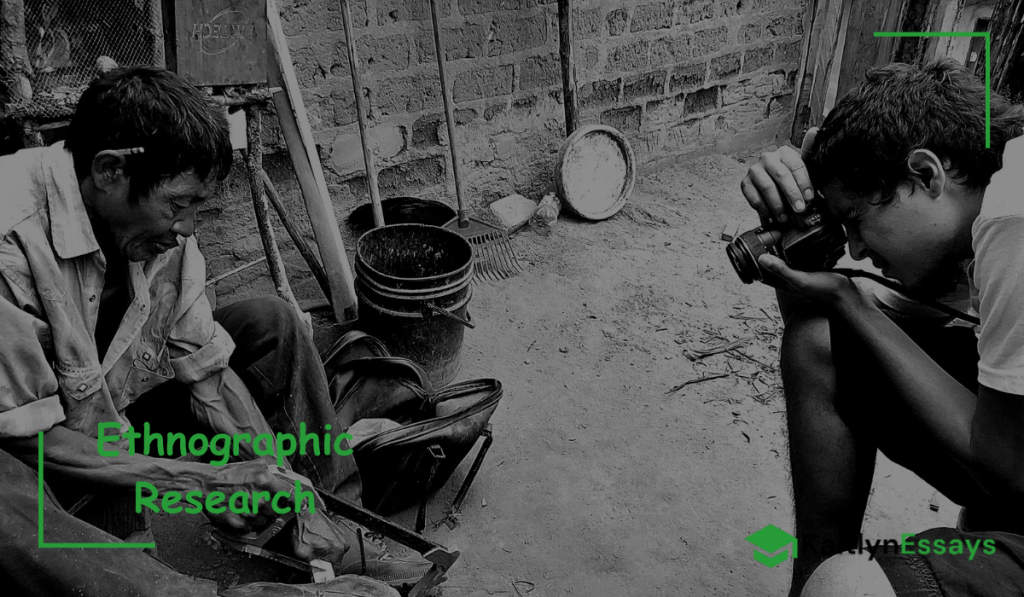
From Margaret Mead’s groundbreaking work in Samoa to contemporary digital ethnographies exploring online communities, this research method has evolved to address modern questions about identity, technology, and globalization. Successful ethnographic studies share common elements: extended fieldwork periods, participant observation, detailed field notes, and careful analysis of cultural patterns. These examples demonstrate how researchers navigate ethical considerations, build trust with participants, and translate complex cultural phenomena into meaningful insights that advance our understanding of human society.
What Is Ethnographic Research?
Ethnographic research is a qualitative method where researchers observe and interact with a group or culture in their natural environment to understand their behaviors, beliefs, and social dynamics. It involves immersive techniques like participant observation, interviews, and field notes, often over extended periods, to capture detailed, context-rich insights. Commonly used in anthropology and sociology, it aims to uncover the meanings and practices that shape a community’s way of life.
Why Ethnographic Research Matters
Ethnographic research matters because it provides deep, nuanced insights into human behavior and cultural practices that other methods often miss. By immersing researchers in the natural settings of their subjects, it captures authentic perspectives, social dynamics, and contextual factors that shape how people live, think, and interact. This approach is invaluable for:
- Understanding Complex Social Phenomena: It reveals the “why” behind behaviors, uncovering motivations, values, and cultural norms that surveys or quantitative data might overlook.
- Informing Design and Policy: Businesses, governments, and organizations use ethnographic findings to create user-centered products, services, or interventions that resonate with specific communities.
- Preserving Cultural Knowledge: It documents and preserves the practices and traditions of marginalized or underrepresented groups, fostering cross-cultural understanding.
- Driving Empathy and Innovation: By prioritizing lived experiences, it helps researchers and decision-makers empathize with diverse perspectives, sparking innovative solutions grounded in real-world needs.
Ethnographic Research Examples
“Street Corner Society” by William Foote Whyte
1. The Research Goal: Challenging Existing Theories
At the time, many sociologists viewed low-income, immigrant neighborhoods (often called “slums”) as chaotic and disorganized. The prevailing theory was one of “social disorganization,” suggesting these communities lacked stable social structures and norms.
Whyte was skeptical. He hypothesised that these communities were not disorganized but simply organized differently from the middle-class society the researchers came from. His ethnographic goal was to uncover and understand this hidden social order from the inside.
2. The Ethnographic Method in Action
Whyte’s methodology is what makes the book a landmark study. He didn’t use surveys or quantitative data. Instead, he immersed himself in the community.
- Long-Term Immersion: Whyte lived for three and a half years (from 1937 to 1940) in Boston’s North End, an Italian-American neighborhood he pseudonymously called “Cornerville.” This long duration is a hallmark of ethnography, as it allows the researcher to build trust and observe patterns over time, beyond initial impressions.
- Participant Observation: This was his primary method. Whyte didn’t just observe from a distance; he actively participated in the daily lives of the young men he studied. He “hung out” on street corners, went to bars and bowling alleys, attended political rallies, and participated in their social club activities. He learned the local Italian dialect to better understand conversations.
- The Key Informant: Whyte’s research would have been impossible without “Doc,” a leader of a corner-boy gang. Doc acted as Whyte’s gatekeeper and key informant. He introduced Whyte to the community, explained the unwritten social rules, sponsored his presence, and vouchsafed for him when others were suspicious. This relationship highlights the critical role of local collaborators in ethnographic work. As Whyte famously said, “Doc was my key to Cornerville.”
- “Thick Description”: Whyte didn’t just record what happened; he described the context, the meanings, and the social significance of actions. For example, a simple bowling match was not just a game. Whyte meticulously documented the scores and observed how the social hierarchy of the group determined who won. High-status members were expected to perform well, and lower-status members would often subconsciously “choke” when bowling against a leader, thereby reinforcing the group’s structure. This is a perfect example of thick description—imbuing a simple act with layers of cultural meaning.
3. Key Ethnographic Findings
Whyte’s immersive method led to groundbreaking insights that would have been invisible to an outside researcher.
- A Highly Organized Social World: Far from being disorganized, Whyte found “Cornerville” to be a complex web of social obligations, hierarchies, and reciprocal relationships. He identified two main groups:
- The “Corner Boys”: Young men who grew up in the neighborhood and whose lives were centered on the social groups of the street corner. They had their own leaders and a strict, informal social hierarchy.
- The “College Boys”: Young men from the same background who were pursuing education and upward mobility, trying to integrate into mainstream American society.
- Interconnected Systems: Whyte mapped how the informal life of the street corner was directly linked to more formal systems of power. The social networks of the “corner boys” were integrated with local political organizations and even illegal rackets (like gambling). To succeed in local politics, a candidate needed the support of corner-group leaders.
- The Insider’s Perspective (Emic View): The book revealed why joining rackets or engaging in local machine politics was a rational and respectable career path for many “corner boys,” given their limited opportunities in the legitimate, mainstream economy. It was a structured path to achieving money and status within their own community’s value system.
4. Ethical and Methodological Reflections
Street Corner Society is also famous for its appendix, where Whyte candidly reflects on his methods, mistakes, and the ethical dilemmas he faced. This self-awareness (or reflexivity) is now considered essential to good ethnography.
- The Role of the Researcher: He discussed the challenges of being a privileged, white, Anglo-Saxon, Protestant (WASP) outsider in a working-class, Italian-Catholic community.
- Ethical Obligations: He debated his responsibility to the people he studied, especially regarding the publication of information about illegal activities. He used pseudonyms for all people and places to protect their identities.
- The Problem of “Going Native”: He wrote about the difficulty of balancing participation with objective observation and the emotional toll of the research.
Why It’s a Quintessential Example
“Street Corner Society” is a definitive example of ethnographic research because it:
- Used long-term participant observation to gain an insider’s view.
- Challenged dominant academic theories by providing rich, on-the-ground, qualitative evidence.
- Revealed a complex, hidden social structure where outsiders saw only chaos.
- Demonstrated the importance of a key informant in gaining access and understanding.
- Included a reflexive appendix that became a foundational text on how to do and think about ethnography.
Margaret Mead’s Study of Samoan Adolescents
1. The Research Goal: Testing the “Nature vs. Nurture” Debate
Under the direction of her mentor, the renowned anthropologist Franz Boas, Mead did not go to Samoa simply to describe a culture. She went with a specific, theory-driven question: Is the emotional turmoil of adolescence—the “storm and stress”—a universal, biological stage of human development (nature), or is it a product of a specific culture’s pressures and restrictions (nurture)?
Her goal was to find a culture where adolescence was different from that in the West. If she could demonstrate that Samoan teenagers did not experience the same anxiety, rebellion, and crisis as American teens, it would be powerful evidence for cultural determinism—the idea that culture, not biology, is the primary force in shaping human personality and behavior.
2. The Ethnographic Method in Action
Mead’s fieldwork in Samoa in 1925-1926 was pioneering for its time, though it has since been critiqued by modern standards.
- Focused Immersion: Mead spent about nine months in Samoa. Instead of studying the entire society, she focused intensely on a specific demographic: a group of 68 adolescent girls on the island of Ta‘ū. This focused approach allowed her to go deep with one segment of the population.
- Participant Observation (with limitations): Mead learned the Samoan language and spent her days with the girls, observing their daily chores, dances, social interactions, and relationships. However, unlike Whyte who lived in the community, Mead lived with an American expatriate family. Critics later pointed to this as a limitation that may have distanced her from a fully immersive experience.
- Interviews and “Thick Description”: Mead conducted detailed, informal interviews with the girls about their lives, particularly their views on family, social obligations, and sexuality. She described their culture not as a list of traits, but as a holistic system where different elements interconnected to produce a certain kind of life experience.
- Cross-Cultural Comparison: The entire study is built on an implicit comparison. She described Samoan life—its casual attitudes, diffused family structures, and lack of high-stakes choices—in direct contrast to the neuroses-inducing pressures of competitive, sexually repressed, 1920s America.
3. Key Ethnographic Findings
Mead’s conclusions were revolutionary and had a massive impact on American culture.
- Adolescence Without “Storm and Stress”: Her central finding was that Samoan adolescence was “the pleasantest time the Samoan girl (or boy) will ever know.” It was a smooth, untroubled transition to adulthood, free from the anguish common in the West.
- The Role of Culture in Smoothing the Path: Mead attributed this peaceful adolescence to specific aspects of Samoan culture:
- Casual Attitude Toward Sex: Mead famously reported that Samoan culture was very permissive about pre-marital sex. She argued this lack of sexual repression and guilt prevented the psychological turmoil seen in American teens.
- Diffused Family Structures: Children were raised by a wide net of relatives in the household, not just by two biologically-obsessed parents. This meant that emotional intensity was diluted, and conflicts with any one adult were less significant.
- Lack of High-Stakes Choices: Samoan girls did not face agonizing decisions about career, religion, or personal philosophy. Their life paths were more or less set, leading to less individual anxiety.
- The Power of Culture: Her ultimate conclusion was a powerful statement for the “nurture” side of the debate. She argued that the difficult period of adolescence was not a biological necessity but a cultural artifact—a penalty paid for the restrictions and complexities of Western civilization.
4. The Controversy: A Cautionary Tale for Ethnography
Decades later, in 1983, anthropologist Derek Freeman published Margaret Mead and Samoa: The Making and Unmaking of an Anthropological Myth. Freeman, who had spent years in Samoa, directly contradicted almost all of Mead’s findings.
- Freeman’s Counter-Findings: He argued that Samoan society was, in fact, highly competitive, violent, and puritanical. He claimed that virginity was highly prized (especially for high-status girls), that rape was common, and that Samoans were intensely jealous and prone to psychological stress.
- Why the Discrepancy? The Freeman-Mead debate became a central controversy in anthropology and highlights key ethnographic risks:
- Informant Reliability: Freeman suggested Mead’s adolescent informants may have been playing a practical joke on her (“telling tales”), describing a fantasy life of sexual freedom to the curious young American woman.
- Confirmation Bias: Critics argue Mead went to Samoa looking for evidence to support Boas’s theory of cultural determinism and was therefore predisposed to interpret what she saw in a certain way.
- Methodological Weaknesses: Her relatively short fieldwork, incomplete immersion (living with expats), and potential language deficiencies were cited as reasons she might have misunderstood the nuances of the culture.
- Historical Change: Defenders of Mead argue that the Samoa Freeman studied decades later had been more heavily influenced by Christianity and was different from the Samoa Mead observed in the 1920s.
Why It’s a Landmark (and Cautionary) Example
Coming of Age in Samoa is a quintessential example of ethnographic research for several reasons:
- Public Impact: It is perhaps the most famous ethnography ever written, bringing the concept of cultural relativism to a massive public audience and influencing everything from education to the sexual revolution.
- Theory-Driven Research: It shows how ethnography can be used not just to describe, but to test and build social theory.
- A Cautionary Tale: The controversy surrounding it serves as a powerful lesson for all ethnographers on the importance of reflexivity (understanding how your own biases and position shape your research), the challenges of informant accuracy, and the need for rigorous, long-term fieldwork to avoid superficial understandings.
“Coming of Age in Second Life” by Tom Boellstorff
1. The Research Goal: Taking the Virtual Seriously
In the early 2000s, many academics and journalists viewed online worlds like Second Life as mere games, escapes from reality, or niche hobbies. They were often studied from the outside, by analyzing data or interviewing users about their online experiences.
Boellstorff had a revolutionary goal: to treat a virtual world not as a game or a subculture, but as a culture in its own right. He sought to understand it from the inside, on its own terms. His guiding question was: What does it mean to be human in a virtual world? He wanted to explore how fundamental aspects of human life—selfhood, community, intimacy, labor, property, and ethics—were being created and experienced in a place made entirely of code.
2. The Ethnographic Method in Action: “Fieldwork in Cyberspace”
The brilliance of the book lies in how Boellstorff rigorously adapted classic ethnographic methods to a non-physical setting. He insisted on experiencing Second Life as its residents did, not with special tools or an outside perspective.
- Long-Term Virtual Immersion: Boellstorff conducted fieldwork for over two years (2004-2007), spending thousands of hours in Second Life. This long duration mirrors the classic immersive fieldwork of Whyte or Malinowski, allowing him to observe cultural patterns, build deep relationships, and move beyond a superficial understanding.
- Participant Observation as an Avatar: He created his own avatar, “Tom Bukowski,” and engaged in the full range of activities available to residents. He didn’t just observe; he participated. He built a house, bought and sold virtual goods, made friends, joined groups, attended concerts, art shows, weddings, academic conferences, and community meetings—all as his avatar. This is the virtual equivalent of Whyte “hanging out” on the street corner.
- “In-World” Methods Only: This is a key methodological choice. Boellstorff conducted all of his research from within Second Life. His interviews were conducted via the platform’s text or voice chat. His observations were made by being virtually present at an event. He deliberately avoided using “out-of-world” data (like server statistics or user demographics provided by the company) because he argued this would be like a sociologist studying a city by looking at census data instead of talking to people. His method ensured he was getting the emic perspective—the insider’s view.
- Learning the “Local Language” and Norms: Just as an ethnographer in a foreign country must learn the language, Boellstorff had to master the specific culture of Second Life. This included learning its jargon and acronyms (SL, RL, avatar, prim, griefing), understanding its social etiquette (like the norms of personal space around an avatar), and learning its technical skills (like how to build objects or teleport).
3. Key Ethnographic Findings
By treating Second Life as a real place for culture, Boellstorff’s research yielded profound insights.
- Virtuality is Actuality: This is his core theoretical argument. He found that the experiences people have and the relationships they form in virtual worlds are not “fake” or less “real” than those in the physical world. They are genuinely felt and have real consequences. People formed deep friendships, fell in love, built businesses, and experienced loss. The virtual, he argued, is not the opposite of the real; it is simply a different kind of real.
- The Creative Power of Selfhood: Avatars were not just masks or puppets. Boellstorff showed they were a powerful medium for identity creation. People used avatars to express aspects of their offline selves or to explore new identities entirely (changing gender, race, or even species). He described this as a “tripartite self”: the person behind the keyboard, the avatar on the screen, and the relationship between them.
- Emergent Culture and Social Structures: Despite being a world designed by a corporation, Boellstorff documented how residents created their own emergent cultures, complete with norms, values, and social structures. He found:
- Economies: A functioning capitalist economy based on the Linden Dollar, with residents creating and selling virtual goods and services.
- Community: The formation of countless subcultures and communities based on shared interests (e.g., furries, goths, role-players).
- Ethics and Deviance: Debates and norms emerged around right and wrong, including concepts like “griefing” (the virtual equivalent of anti-social behavior) and the ethics of virtual relationships.
- Rejecting “Digital Dualism”: Boellstorff powerfully argued against the common-sense idea that the “real world” and the “virtual world” are two separate, distinct spheres. He showed how they are deeply entangled. What happens in Second Life is shaped by offline lives, and in turn, experiences in Second Life can profoundly affect a person’s offline identity, relationships, and well-being.
Why It’s a Quintessential Example of Modern Ethnography
Coming of Age in Second Life is a landmark study because it:
- Pioneered a Methodology: It provided the first robust, theoretically-grounded model for conducting long-term ethnographic fieldwork in a purely virtual environment.
- Legitimized a Field of Study: It proved that virtual worlds are legitimate sites for anthropological inquiry—that they are places where fundamental human culture is being forged.
- Adapted Classic Principles: It successfully translated the core ethnographic tenets of participant observation, long-term immersion, and “thick description” to the digital age.
- Offered a Powerful Theory: It gave us the language and concepts (like rejecting digital dualism and seeing virtuality as actuality) to understand what it means to be human in an increasingly online world.
Other Examples
Paul Willis’ “Learning to Labour”
Paul Willis conducted ethnographic research in the UK by observing working-class teenage boys in school. He discovered that students often “resist” school culture through humor, rebellion, and peer bonding.
His study revealed that this resistance inadvertently funneled them into low-paying manual labor, repeating the very cycle they seemed to reject.
Key insight: Cultural resistance can reproduce existing class structures.
Nancy Scheper-Hughes in Brazil
Anthropologist Nancy Scheper-Hughes spent years in a Brazilian shantytown studying issues like infant mortality, poverty, and maternal care. Her research revealed a complex moral world where mothers sometimes emotionally detached from sick infants—a coping mechanism in the face of chronic loss and limited resources.
Key insight: Human behavior, even when it appears shocking, often makes sense within its cultural and economic context.
Philippe Bourgois and Drug Culture in East Harlem
In his book “In Search of Respect: Selling Crack in El Barrio”, Bourgois spent five years living in East Harlem, New York, studying the lives of Puerto Rican drug dealers.
Instead of demonizing them, Bourgois showed how economic exclusion and racism pushed people into the drug trade, which also provided them with respect, status, and social networks.
Key insight: Criminal behavior can be a rational choice in a context of limited options.
Elijah Anderson’s “Code of the Street”
Sociologist Elijah Anderson studied inner-city neighborhoods in Philadelphia to explore how violence, respect, and survival are governed by an unwritten “code of the street.”
His fieldwork, based on interviews and long-term observation, highlighted how young men develop street smarts and defensive behaviors in response to institutional failure and social inequality.
Key insight: Informal rules often emerge in environments where formal institutions fail.
Ethnography in User Experience (UX) Design
Modern ethnography isn’t limited to academia. In the tech industry, companies like Google and IDEO use ethnographic methods to improve product design. UX researchers observe how people interact with technology in everyday settings, uncovering real-world problems that surveys can’t detect.
For example, a company might send researchers into homes to study how families use smart TVs. The resulting data can influence product features, interfaces, and marketing strategies.
Key insight: Ethnography drives human-centered innovation.
Ethnographic Research in Healthcare
Healthcare professionals use ethnography to understand patient experiences, especially in marginalized communities. For instance, researchers might study how patients with chronic illness navigate complex medical systems or how cultural beliefs affect medication adherence.
One notable study explored how Somali immigrants in the U.S. understand autism. The researchers found that cultural beliefs about parenting and development shaped how families responded to diagnosis and treatment.
Key insight: Better healthcare begins with understanding patients’ cultural realities.
Ethnography in Education: The “Funds of Knowledge” Study
In a landmark project, researchers Luis Moll and colleagues conducted ethnographic studies with Mexican-American families in Arizona. They discovered that families possessed rich knowledge systems—mechanical skills, agricultural practices, entrepreneurship—that schools often overlooked.
They argued for integrating students’ home knowledge into classroom learning, creating more equitable and culturally relevant education.
Key insight: Students bring valuable life knowledge into the classroom that schools can tap into.
FAQs
What are the three types of ethnography?
Realist ethnography – An objective, third-person account by the researcher.
Critical ethnography – Focuses on power, inequality, and social justice.
Autoethnography – The researcher uses personal experience to explore cultural meanings.
What are the topics of ethnography research?
Ethnography can explore topics like:
Cultural traditions and rituals
Workplace behavior and dynamics
Education and classroom interactions
Health beliefs and patient experiences
Digital communities and social media use
How do you write an ethnographic research?
To write ethnographic research:
Start with a clear research question and cultural group
Collect data through observation, interviews, and field notes
Describe the setting and participants in detail
Analyze patterns and cultural meanings
Present findings with rich, descriptive narratives and your interpretations